
Ceramic Beads Manufacturer and Supplier: Complete Industrial Buying Guide
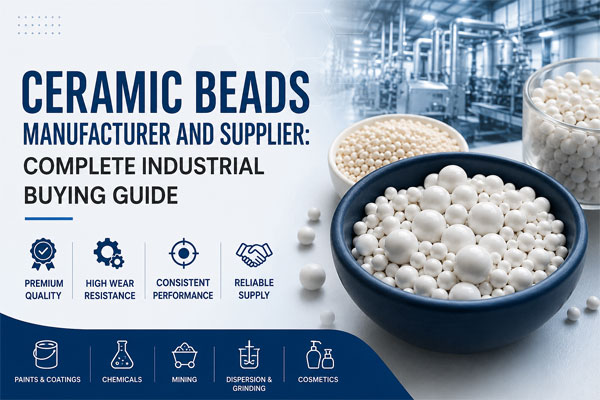
Ceramic Beads Manufacturer and Supplier
A reliable Ceramic Beads Manufacturer helps industries achieve efficient grinding, even material dispersion and smooth surface finishing. Ceramic beads are small, spherical components used in grinding mills, polishing equipment and surface-treatment processes.
Choosing the correct beads is important because their material, size, density and hardness directly affect processing performance. D-Tech Technical Ceramics is a Ceramic Beads Supplier in Ahmedabad, Gujarat, offering alumina, zirconia, silica-based, micro and customised ceramic beads for different industrial applications.
Why Are Ceramic Beads Used in Industrial Processing?
Grinding and surface-treatment processes can create high friction, impact and wear. Standard materials may wear quickly or introduce unwanted impurities into the finished product.
Ceramic beads are preferred because they offer hardness, wear resistance, consistent shape and chemical stability. Their uniform size can support controlled processing and more consistent results.
Main benefits include:
- Efficient grinding and dispersion
- Better particle-size consistency
- Lower contamination than some metallic media
- Longer service life
- Reduced bead consumption
- Smooth polishing performance
- Resistance to abrasive materials
- Suitability for wet and dry processes
- Support for high-purity applications
What Are Ceramic Beads?
Ceramic beads are small, round particles made from advanced ceramic materials. They are used as grinding, dispersion, polishing or blasting media in industrial equipment.
Their spherical shape allows them to move freely inside mills and processing machines. During operation, the beads contact the material or surface repeatedly, helping reduce particle size, mix pigments, remove surface deposits or improve the final finish.
Ceramic beads are commonly selected for processes that require:
- Fine particle-size reduction
- Uniform material dispersion
- Smooth surface finishing
- High wear resistance
- Low product contamination
- Reliable performance during continuous use
- Resistance to chemicals and corrosion
Types of Ceramic Beads
A professional Ceramic Beads Manufacturer should offer different bead materials because every application has different operating conditions.
Zirconia Ceramic Beads
Zirconia ceramic beads are known for high density, mechanical strength, fracture toughness and wear resistance. They are commonly selected for high-efficiency grinding, fine dispersion and demanding processing conditions.
Zirconia beads may be suitable for:
- Fine and ultra-fine grinding
- Paint and coating dispersion
- Ink manufacturing
- Advanced material processing
- Chemical production
- High-purity applications
Alumina Ceramic Beads
Alumina ceramic beads provide good hardness and wear resistance for general industrial grinding. They can be a practical option where consistent performance and cost control are both important.
Common applications include:
- Ceramic raw-material grinding
- Mineral processing
- Chemical manufacturing
- Pigment dispersion
- General industrial milling
- Surface finishing
D-Tech Ceramics includes alumina beads in its ceramic bead range for general industrial use.
Silica-Based Ceramic Beads
Silica-based ceramic beads may be used for polishing, blasting and surface-treatment applications. Their smooth shape can help produce a more even finish on suitable materials.
They may be selected for:
- Surface cleaning
- Light blasting
- Polishing
- Deburring
- Decorative finishing
- Controlled surface preparation
Custom Ceramic Beads
Standard beads may not meet every production requirement. Custom beads can be developed according to the required material, diameter, density, composition and application.
Customisation may include:
- Specific bead diameter
- Controlled size grading
- Required ceramic material
- Different density levels
- Application-based composition
- Special surface finishing
- Trial quantities
- Bulk production
- Custom packaging
Applications of Ceramic Beads
Ceramic beads are used in industries that require particle-size reduction, material mixing, polishing or surface cleaning.
Paints and Coatings
Ceramic beads help break pigment particles and distribute them evenly throughout paints and coatings. Proper dispersion can improve colour consistency and surface appearance.
Printing Inks
Ink manufacturers use fine grinding beads to disperse pigments and other solid materials into liquid formulations.
Chemical Processing
Ceramic beads may be used to grind or mix chemical materials while helping reduce unwanted metallic contamination.
Pharmaceutical Processing
Selected ceramic beads can support controlled particle reduction in pharmaceutical material processing. The bead material must be chosen according to purity and process requirements.
Cosmetics Manufacturing
Cosmetic manufacturers may use fine beads for pigment dispersion and smooth formulation processing.
Ceramic and Advanced Materials
Ceramic beads are used to process powders, minerals and other advanced materials into finer and more uniform particles.
Surface Polishing
Smooth ceramic beads can polish surfaces and help improve their final appearance.
Blasting and Surface Treatment
Ceramic beads can remove deposits, clean surfaces or create a controlled finish without using sharp abrasive particles.
Difference Between Ceramic Beads and Steel Beads
| Point | Ceramic Beads | Steel Beads |
|---|---|---|
| Corrosion Resistance | Generally high | May corrode in certain conditions |
| Metal Contamination | Lower risk | May introduce metallic particles |
| Material Options | Alumina, zirconia and silica-based | Different steel grades |
| Chemical Stability | Suitable for many chemical processes | Depends on the chemical environment |
| Colour Contamination | Lower in suitable applications | May affect light-coloured products |
| Application | Grinding, polishing and blasting | Mainly grinding and blasting |
Why Choose D-Tech Technical Ceramics?
D-Tech Technical Ceramics is based in Ahmedabad, Gujarat, and specialises in advanced ceramic materials and industrial ceramic components. Its manufacturing capabilities include forming, precision machining, grinding, finishing, high-temperature sintering and quality inspection.
Customers can choose D-Tech Ceramics for:
- Knowledge of advanced ceramic materials
- Standard and custom ceramic beads
- Application-based material selection
- Precision bead sizing and grading
- Alumina and zirconia options
- Micro beads for fine processing
- Industrial bulk supply
- Quality inspection
- Technical support
- Custom manufacturing capability
Frequently Asked Questions
What are ceramic beads used for?
Ceramic beads are used for grinding, dispersion, polishing, blasting and surface-treatment processes.
Which materials are used to make ceramic beads?
Ceramic beads can be made from zirconia, alumina and silica-based ceramic materials.
What is the difference between zirconia and alumina beads?
Zirconia beads generally offer higher density and toughness. Alumina beads provide good hardness and can be a practical choice for general grinding.
Can ceramic beads be used for fine grinding?
Yes. Small and micro ceramic beads are used for fine and ultra-fine particle-size reduction.
Are ceramic beads suitable for wet grinding?
Many ceramic beads are suitable for wet grinding, but compatibility with the liquid, chemical and equipment should be confirmed.
How do I select the correct bead size?
Selection depends on the mill type, starting particle size, required final size and processed material.
Can a Ceramic Beads Manufacturer provide customised sizes?
Yes. D-Tech Technical Ceramics offers custom sizes, densities and material compositions based on industrial requirements.
Does a Ceramic Beads Supplier offer bulk quantities?
Yes. Bulk production and customised supply can be provided according to the required bead type and quantity.
Which industries use ceramic beads?
Ceramic beads are used in paints, coatings, inks, chemicals, pharmaceuticals, cosmetics, ceramics and surface-finishing industries.
What information should I provide before ordering?
Share your equipment type, processed material, application, required bead size, quantity and expected final result.