
Why Injection Molded Ceramic Parts Are Ideal for Precision Industries
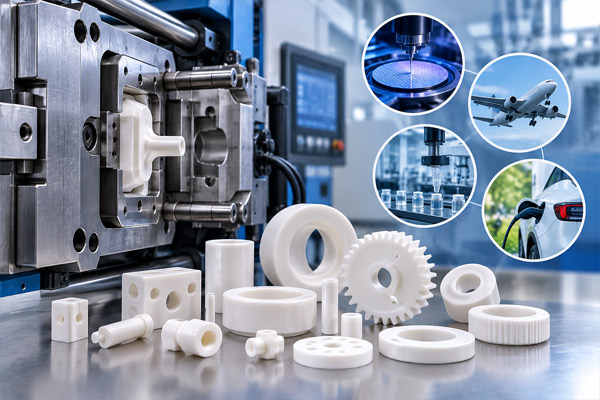
Why Injection Molded Ceramic Parts Are Ideal for Precision Industries
Modern industries need components that can handle wear, heat, chemicals and demanding operating conditions without losing accuracy. This has increased the use of advanced technical ceramics in applications where conventional metals and plastics may not provide the required performance.
Ceramic Injection Molding, commonly known as CIM, offers an effective way to manufacture small, complex and precision ceramic components in repeatable quantities. For companies searching for an Injection Molded Ceramic Parts Manufacturer in Gujarat, understanding this process can help in selecting the right manufacturing partner and ceramic material for the application.
D Tech Technical Ceramics provides precision ceramic solutions for industrial applications from Ahmedabad, Gujarat, with capabilities for customized ceramic components and advanced ceramic materials.
What Are Injection Molded Ceramic Parts
Injection molded ceramic parts are components produced by combining fine ceramic powder with a suitable binder system. This mixture is molded into the required geometry using an injection molding process.
After molding, the binder is removed through a controlled debinding stage. The component is then sintered at high temperature to achieve the required strength, density and ceramic properties.
This process is particularly useful when manufacturers need:
- Complex shapes
- Small precision components
- Repeatable dimensions
- Smooth surface profiles
- High production quantities
- Reduced secondary machining
- Customized component geometries
Because the component is formed close to its final shape, Ceramic Injection Molding can reduce the need for extensive machining of hard ceramic materials.
Why Industries Choose Ceramic Injection Molding
Traditional ceramic manufacturing methods remain suitable for many components, but complex parts can require additional machining and finishing.
Ceramic Injection Molding gives designers greater flexibility when creating components with detailed features, thin sections, holes, curves and difficult geometries.
It can also provide consistent results across repeat production batches. This makes CIM attractive for industries where dimensional accuracy and repeatability are important.
Manufacturers can therefore develop components around their actual application instead of redesigning equipment simply because conventional manufacturing methods cannot easily produce the required ceramic geometry.
Ceramic Materials Used for Injection Molded Parts
Material selection is one of the most important factors in technical ceramic manufacturing. The correct ceramic depends on temperature, mechanical load, wear, electrical properties and the operating environment.
Alumina Ceramic
Alumina is widely selected for industrial ceramic components because of its hardness, electrical insulation, wear resistance and temperature capability.
It can be suitable for electrical components, wear parts, industrial machinery and precision engineering applications.
Zirconia Ceramic
Zirconia is known for its high strength and fracture toughness compared with many conventional ceramic materials.
It can be considered for precision components exposed to mechanical loading, repeated movement or demanding wear conditions.
Silicon Nitride
Silicon nitride combines mechanical strength with excellent performance in demanding temperature conditions.
It is used where lightweight construction, wear resistance and thermal performance are important considerations.
The final material should always be selected according to actual operating conditions rather than choosing a ceramic only on the basis of hardness or price.
Industries Using Injection Molded Ceramic Components
Demand for precision ceramic parts is expanding across several engineering industries.
Electrical and Electronics
Technical ceramics can provide electrical insulation while maintaining dimensional stability and resistance to heat.
Automotive and EV
Ceramic components can be used in demanding automotive and electric vehicle systems where heat resistance, wear resistance and electrical properties are important.
Aerospace
Aerospace engineering requires lightweight and high-performance materials capable of operating under demanding environmental conditions.
Medical and Precision Equipment
Small ceramic components with complex geometries can support applications where accuracy, material stability and consistent manufacturing are required.
Chemical Processing
Certain ceramic materials provide excellent resistance against corrosive and aggressive operating environments.
Industrial Machinery
Injection molded ceramic components can be considered for wear parts, guides, insulating components and other precision engineering applications.
Key Advantages of Injection Molded Ceramic Parts
Ceramic Injection Molding offers several benefits when the component design and production quantity are suitable for the process.
Complex Geometry: Intricate features can be incorporated into the component during molding.
Production Repeatability: Once tooling and process parameters are established, parts can be manufactured with consistent geometry.
Reduced Machining: Near net shape manufacturing can lower the amount of difficult post sintering machining.
Material Performance: Advanced ceramics can provide excellent wear, thermal, electrical and chemical properties.
Design Flexibility: Manufacturers can develop customized ceramic components according to drawings and operating requirements.
Scalable Production: CIM is particularly useful when precision ceramic components are required repeatedly in medium or higher quantities.
What Buyers Should Share With a Ceramic Parts Manufacturer
Providing complete technical information can significantly improve component development.
Before requesting a quotation, buyers should ideally provide:
- Component drawing or 3D model
- Required dimensions
- Dimensional tolerances
- Ceramic material preference
- Operating temperature
- Chemical exposure
- Mechanical load
- Electrical requirements
- Required surface finish
- Expected order quantity
If the ceramic grade is not finalized, the manufacturer can evaluate the application requirements and recommend a suitable material.
Why Choose an Injection Molded Ceramic Parts Manufacturer in Gujarat
Gujarat has a strong industrial ecosystem serving engineering, chemical, pharmaceutical, electrical, automotive and manufacturing companies.
Working with an Injection Molded Ceramic Parts Manufacturer in Gujarat can make technical discussions, customization and industrial sourcing more convenient for companies located in Ahmedabad and other manufacturing regions across the state.
D Tech Technical Ceramics supports customized advanced ceramic components for different industrial requirements. Its ceramic manufacturing capabilities include material selection, forming, injection molding, high temperature sintering, precision finishing and quality inspection.
Custom Ceramic Components for Application Specific Requirements
Every industrial ceramic application is different. A component suitable for an electrical insulation system may require completely different properties from a ceramic component used in a pump, furnace or wear application.
For this reason, buyers should evaluate more than the component dimensions.
Material grade, operating temperature, chemical environment, mechanical stress, surface finish and production volume should all be considered during component development.
Working with an experienced technical ceramic manufacturer during the design stage can also help identify manufacturing limitations before tooling or production begins.
Conclusion
Ceramic Injection Molding provides an efficient manufacturing route for complex, small and precision technical ceramic components. It combines design flexibility with the high-performance properties of advanced ceramic materials.
For businesses looking for an Injection Molded Ceramic Parts Manufacturer in Gujarat, D Tech Technical Ceramics offers customized ceramic solutions for industrial and precision engineering requirements.
Share your component drawing, material requirement, operating conditions and expected quantity with the D Tech Technical Ceramics team to discuss a suitable ceramic manufacturing solution.
Frequently Asked Questions
D Tech Technical Ceramics manufactures and supplies advanced ceramic components from Ahmedabad, Gujarat, including customized injection molded ceramic parts for different industrial applications.
Buyers should provide a component drawing, dimensions, tolerances, operating temperature, application details, required quantity and preferred ceramic material if already selected.
Common options include alumina, zirconia and silicon nitride. The appropriate ceramic depends on wear, temperature, electrical, mechanical and chemical requirements.
Yes. Ceramic Injection Molding is especially useful for components containing complex geometries and detailed features that may be difficult or expensive to manufacture using conventional machining methods.
Custom ceramic components can be developed according to application requirements and technical drawings, subject to material, dimensional, tolerance and manufacturing feasibility.
Yes. One of the major advantages of CIM is repeatable production once the component design, tooling and manufacturing process have been properly developed.
Yes. One of the major advantages of CIM is repeatable production once the component design, tooling and manufacturing process have been properly developed.