
Ceramic Bearing Manufacturer for High Performance Industrial Applications
How to Choose the Right Ceramic Bearing Manufacturer
A reliable ceramic bearing manufacturer helps industries improve equipment performance where standard steel bearings may face problems such as corrosion, high temperature, electrical conductivity, or rapid wear.
Ceramic bearings are used in demanding applications because ceramic materials can offer low friction, high hardness, electrical insulation, corrosion resistance, and strong performance under difficult operating conditions.
Industries such as pumps, motors, chemical processing, aerospace, medical equipment, semiconductor manufacturing, precision machinery, and high-speed equipment may use ceramic bearings depending on the application.
Choosing the right manufacturer is important because ceramic bearing performance depends on material selection, dimensions, load, speed, temperature, lubrication, and working environment.
What Is a Ceramic Bearing
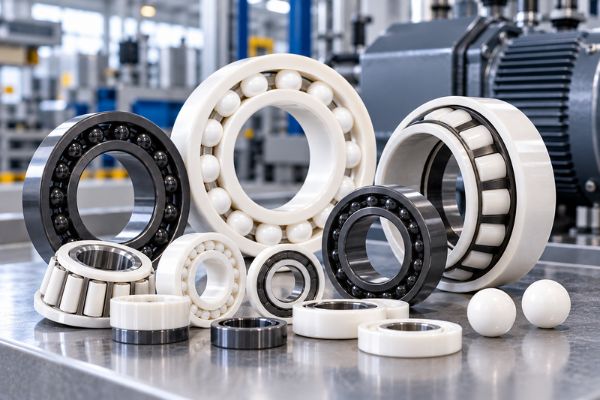
A ceramic bearing is a bearing that uses ceramic material in its balls, rollers, rings, or other components.
- Ceramic materials commonly used in bearings include:
- Silicon nitride
- Zirconia
- Alumina
- Silicon carbide
- Ceramic bearings may be available as:
- Full ceramic bearings
- Hybrid ceramic bearings
- Ceramic ball bearings
- Ceramic sleeve bearings
- Ceramic bush bearings
- Custom ceramic bearing components
A full ceramic bearing generally uses ceramic material for both rolling elements and rings, while a hybrid ceramic bearing combines ceramic rolling elements with metal rings.
Why Industries Use Ceramic Bearings
Ceramic bearings are selected when standard bearings cannot provide the required performance.
Important benefits may include:
- High hardness
- Low friction
- Corrosion resistance
- Electrical insulation
- Lower weight
- High-speed capability
- Temperature resistance
- Low thermal expansion
- Reduced magnetic interference
- Long service life in suitable applications
However, the correct bearing must always be selected according to the real operating conditions.
Ceramic Bearing Materials and Their Properties
Different ceramic materials offer different advantages.
| Ceramic Material | Main Characteristics | Common Applications |
|---|---|---|
| Silicon Nitride | High strength, low weight, good speed capability | High-speed bearings and precision equipment |
| Zirconia | Good toughness and corrosion resistance | Chemical and wet environments |
| Alumina | High hardness and electrical insulation | Industrial and electrical applications |
| Silicon Carbide | Excellent hardness and chemical resistance | Harsh and corrosive environments |
Material selection should be based on operating temperature, load, speed, chemicals, and mechanical requirements.
Full Ceramic Bearings
Full ceramic bearings are made mainly from ceramic materials.
They are often selected for applications where corrosion, electrical conductivity, lubrication limitations, or harsh chemical exposure are major concerns.
Possible advantages include:
- Strong corrosion resistance
- Electrical insulation
- Low magnetic response
- Reduced lubrication requirements in certain applications
- Hybrid ceramic bearings
- Good performance in aggressive environments
They can be used in chemical equipment, medical devices, vacuum systems, semiconductor equipment, and other specialised machinery.
Hybrid Ceramic Bearings
Hybrid ceramic bearings usually combine ceramic balls with steel bearing rings.
Silicon nitride balls are commonly used in hybrid bearing designs.
Hybrid ceramic bearings may provide:
- Lower rotating mass
- Reduced friction
- Better high-speed performance
- Lower heat generation
- Electrical insulation through ceramic balls
- Improved wear performance
If the ceramic grade is not finalized, the manufacturer can evaluate the application requirements and recommend a suitable material.
Applications of Ceramic Bearings
A professional ceramic bearing manufacturer may supply bearings for many industrial sectors.
Electric Motors
Ceramic bearings can help reduce electrical current damage in some motor applications. Hybrid ceramic bearings are commonly considered for high-speed motors and electrical equipment.
Pumps and Fluid Handling Equipment
Ceramic bearings may be suitable for pumps exposed to water, chemicals, or corrosive fluids. The material should be selected according to the fluid being handled.
Chemical Processing Industry
Corrosive chemicals can damage conventional steel bearing materials. Ceramic bearings made from suitable materials may provide better corrosion resistance.
High Speed Machinery
Low weight and low friction can make ceramic bearings useful in high-speed rotating equipment.
Semiconductor Equipment
Ceramic bearings may be used where electrical insulation, cleanliness, and precision are important.
Medical Equipment
Certain ceramic materials may be used in specialised medical and laboratory equipment because of their corrosion resistance and non-magnetic properties.
Ceramic Bearings for High Temperature Applications
High-temperature environments can create challenges for standard bearings.
Temperature affects:
- Bearing material
- Lubrication
- Cage design
- Clearance
- Dimensional stability
Ceramic materials can withstand higher temperatures than many conventional materials, but the complete bearing design must still be suitable for the application.
A manufacturer should evaluate the complete operating environment instead of selecting the bearing only by temperature rating.
Custom Ceramic Bearings and Components
Not every industrial application can use a standard bearing size.
A ceramic bearing manufacturer may provide customised components based on drawings or specifications.
Customisation may include:
- Inner diameter
- Outer diameter
- Width
- Ball size
- Ring dimensions
- Surface finish
- Material selection
- Tolerance
- Groove design
- Bearing geometry
Custom ceramic components can also be developed for specialised machinery and OEM applications.
What to Check Before Buying Ceramic Bearings
Before sending an enquiry, provide the manufacturer with correct application details.
Bearing Size
Provide:
● Inner diameter
● Outer diameter
● Width
● Required tolerance
Rotational Speed
High-speed applications may require specific bearing materials and designs.
Load
Both radial and axial loads should be considered.
Operating Temperature
Provide normal and maximum operating temperature.
Working Environment
Inform the manufacturer if the bearing will be exposed to:
● Water
● Chemicals
● Vacuum
● Dust
● Food products
● Electrical current
● High humidity
Lubrication Conditions
Some applications require grease or oil, while certain ceramic bearing designs may work with reduced lubrication.
Required Ceramic Material
If the material is already specified in the equipment design, share it with the manufacturer.
Ceramic Bearing Manufacturer in Ahmedabad
Ahmedabad has a strong engineering and manufacturing base with industries using pumps, motors, machinery, chemicals, pharmaceuticals, and precision equipment.
A ceramic bearing manufacturer in Ahmedabad can support OEMs, maintenance teams, equipment manufacturers, and industrial buyers with standard or customised ceramic bearing components.
Local technical communication can also help when buyers need custom dimensions, samples, drawings, or replacement components.
Ceramic Bearing Manufacturer in Gujarat
Gujarat has major industrial areas in Ahmedabad, Vadodara, Bharuch, Ankleshwar, Rajkot, Surat, Vapi, and Dahej.
Industries in these regions operate equipment where heat, corrosion, chemicals, speed, and electrical conditions can affect conventional bearings.
A ceramic bearing manufacturer in Gujarat can support these industries with application-specific ceramic bearing solutions.
Ceramic Bearing Manufacturer in India
Industrial buyers across India increasingly require advanced materials for demanding machinery.
A reliable ceramic bearing manufacturer in India should be able to support customers with:
- Material selection
- Standard ceramic bearings
- Hybrid ceramic bearings
- Custom ceramic components
- Dimensional accuracy
- Surface finishing
- Application-based recommendations
- Bulk production support
For OEM requirements, the manufacturer should also be able to work from technical drawings and specifications.
How to Select the Right Ceramic Bearing Manufacturer
Do not select a supplier only on price.
Check the following factors:
Ceramic Material Expertise
The manufacturer should understand alumina, zirconia, silicon nitride, silicon carbide, and other advanced ceramic materials.
Precision Manufacturing
Bearing components require tight dimensional control.
Custom Capability
Custom production is important for specialised equipment.
Surface Quality
Surface finish affects friction and performance.
Technical Support
The manufacturer should understand load, speed, temperature, chemicals, and equipment conditions.
Consistent Quality
Repeat orders should maintain consistent dimensions and material quality.
Ceramic Bearings vs Steel Bearings
| Factor | Ceramic Bearings | Steel Bearings |
|---|---|---|
| Corrosion Resistance | High with suitable ceramic | Limited without protection |
| Electrical Insulation | Excellent | Conductive |
| Weight | Lower in many ceramic materials | Higher |
| High-Speed Use | Very good in suitable designs | Good |
| Magnetic Properties | Low or non-magnetic | Magnetic |
| Hardness | Very high | High |
| Cost | Usually higher | Usually lower |
| Application | Special and demanding environments | General industrial use |
Neither bearing type is best for every application.
The final choice should be based on technical requirements.
Conclusion
Choosing the right ceramic bearing manufacturer is important when your equipment requires better corrosion resistance, electrical insulation, high-speed performance, low friction, or reliable operation in difficult industrial conditions.
The best ceramic bearing should be selected according to material, load, speed, temperature, environment, dimensions, and lubrication requirements.
A manufacturer with advanced ceramic knowledge and custom manufacturing capability can help industrial buyers select the right ceramic bearing for pumps, motors, precision machines, chemical equipment, and specialised applications.
Frequently Asked Questions
A ceramic bearing is a bearing that uses ceramic material in its balls, rings, rollers, or other components. Common materials include silicon nitride, zirconia, alumina, and silicon carbide.
The best material depends on the application. Silicon nitride is often used for high-speed bearings, zirconia for corrosion resistance, alumina for electrical insulation, and silicon carbide for harsh chemical environments.
Full ceramic bearings use ceramic components for the rings and rolling elements, while hybrid ceramic bearings generally use ceramic balls with steel rings.
Ceramic materials can perform well at elevated temperatures, but the complete bearing design, cage, lubrication, and operating environment must also be considered.
Yes. Hybrid ceramic bearings are often used in electric motors because ceramic balls can help reduce electrical current damage and support high-speed operation.
Yes. Ceramic bearings and bearing components can be manufactured according to required dimensions, tolerances, material, surface finish, and application specifications.
Look for experience with advanced ceramic materials, precision manufacturing, custom production, technical support, dimensional control, and experience with industrial applications.